Stop Optimizing Your Life to Death: Why You Need to Play Like a Kid Again
Forget productivity systems. The real cure for burnout lives in the childhood activities you abandoned. Here's how to bring back what made you feel alive.
The Nostalgia Cure: Why Your Childhood Hobbies Hold the Key to Beating Burnout
I've been thinking about nostalgia lately. You know, that bittersweet feeling you get when you remember the good times that feel impossibly far away now?
Most people think nostalgia is just a short mental trip to the past. A nice feeling that doesn't amount to much. But they're wrong.
Why Nostalgia Matters More Than You Think
The people I coach are exhausted. Burned-out solopreneurs, small business owners, and executives who've lost their spark. They come to me running on fumes, overwhelmed by responsibilities, and convinced there's something fundamentally wrong with them.
And you know what I inevitably ask them in our first few sessions? "What'd you do for fun as a kid?"
As you can imagine, they usually look at me like I've lost the plot. What does childhood have to do with their current crisis? A lot, as it turns out.
You have more responsibilities than you used to. Less time than you used to have. And way more stress than you used to. Am I right?
But the antidote to your burnout isn't another productivity system or time management hack. It's not a better morning routine or a different task management app.
It's remembering what you did before everything became transactional.
What You Lost Between Childhood and Now
Think about what you did as a kid to pass the time.
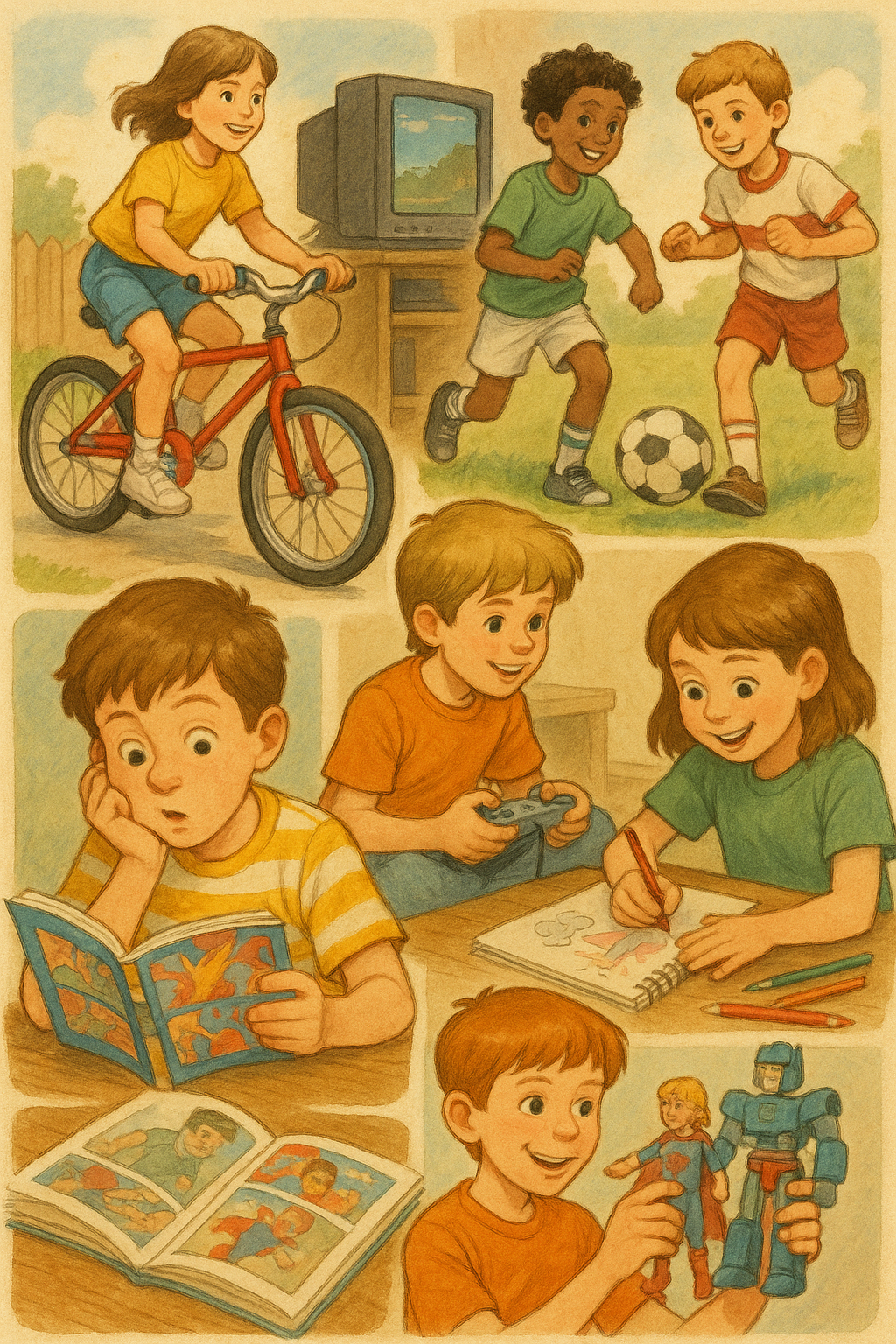
Rode your bike around the neighborhood. Played video games for hours. Played sports with friends. Read comic books cover to cover. Played with action figures. Drew pictures and wrote stories.
You did these things for one reason, and one reason only: Pure enjoyment. No ROI calculations. No performance reviews. No metrics. Just for the fun of it.
And that's exactly what's missing from your life right now.
Somewhere between childhood and now, you stopped doing things just because they felt good. Everything became transactional. Everything had to have a purpose. Even your hobbies became optimization projects.
The Problem with Productivity Culture
Your brain wasn't built to run at 100% productivity forever. You need space where nothing is at stake. Where you can't fail. Where there's no outcome to measure.
That's not wasting time. That's how you refill the tank.
Most people don't understand this. They've bought into the idea that every minute needs to be productive. That downtime is weakness. That hobbies need to generate income or build skills or expand networks.
But that mindset is exactly what's burning you out. You're operating like a machine, and machines break down when they run without maintenance.
As a personal example, I started drawing again about six months ago. Just doodling. Nothing fancy or elaborate. Just me, a pencil, and a sketchbook.
And something gradually shifted. My thinking started to become sharper. My writing started to get clearer. My stress started to drop.
Why? Because I finally gave my brain permission to wander without a destination.
What Research Says About Play and Mental Health
Research shows that engaging in playful activities reduces cortisol levels and releases endorphins. The same chemicals that make exercise beneficial also get triggered when you do something purely for enjoyment.
But here's what most people miss: It's not about the activity itself. It's about the mindset you bring to it.
When adults engage in hobbies "for their health" or "to network" or "to build a personal brand," they miss the entire point. They've turned play into work. And work is what's burning them out in the first place.
The magic happens when you do something with zero expectations. No outcome to measure. No performance to evaluate. Just the act itself.
Studies from the University of Southampton found that nostalgia increases optimism and future-oriented thinking. When people reconnect with positive childhood memories, they report higher life satisfaction and lower stress levels.
But it goes deeper than that. Rediscovering childhood activities helps you reconnect with a version of yourself that existed before you learned to optimize everything.
The Hidden Cost of Abandoning Play
You stopped playing because you thought you had to. Because adults don't ride bikes around the neighborhood for fun. Because drawing is for artists. Because video games are a waste of time.