Stop Pretending Like You Don't Have Choices
Why "I have no choice" or "I don't have any other options" is almost never true, and what happens when you finally admit it.

You Have More Choices Than You're Willing to Admit
Every single day — from the second you wake up to the second you fall asleep again — you're making decisions. You choose what to eat, how to spend your time, which e-mails to ignore, which conversations to avoid, and how long to sit in the parking lot before going into the office. You make upwards of 35,000 choices a day, mostly on autopilot and without ever even acknowledging you're making them at all.
And that's exactly the problem. Somewhere, along the way, most people convinced themselves they're not choosing, they're just reacting. Things happen to them, they don't have options, or their hands are tied. Life is doing the thing to them, not the other way around. And as long as that story holds, they stay exactly where they are, which for a lot of people, is somewhere between quietly miserable and vaguely resentful.
The 4 Flavors of Choices
Not all choices look the same, which is part of why it's so easy to miss them. They show up in four distinct ways, and you've probably done all four of them at some point this week (if not today).
Flavor #1: The choices you made and won't own.
These are the ones where you knew exactly what you were doing, but when the consequences showed up, someone else got the blame. You took the shortcut at work, it backfired, and somehow your coworker didn't catch it. You skipped the gym for three months, and now the gym is too far away, the hours are inconvenient, and the parking is genuinely terrible. You chose, the outcome arrived, and you immediately looked for someone to hand the invoice to.
Flavor #2: The choices you made without realizing it.
These are sneakier. They don't announce themselves or send a calendar invite. You "never had time" to work on that thing you keep saying matters to you, but you found two hours to scroll your phone before bed. You didn't consciously choose to waste that time, you just didn't consciously choose anything else, which is the same thing. When you're not deciding, your defaults are deciding for you, and your defaults don't have your best interests in mind.
Flavor #3: The choices you know about but refuse to acknowledge.
This is where denial lives. You know you could leave the job that's slowly draining the life out of you. You know you could have that conversation with your partner that you've been circling for six months. You know you could set a boundary with the client who treats you like a vending machine with a pulse. But you don't, because acknowledging those choices means you'd have to do something about them, and that would mean facing the possibility you might fail or things might get go sideways. Instead, you decide those options don't even exist (it's tidier that way).
Flavor #4: The choices you outsourced by not choosing.
Inaction is still a decision, just one where you handed the pen to someone else. When you avoid making a call, time makes it for you, circumstances make it for you, or other people make it for you. And those forces are rarely working from the same set of priorities you are. Passive choice-making is still choice-making, it just comes with less agency and more regret.
Why This Actually Matters
Where you end up in life is a direct result of the choices you make or don't make. Every choice has consequences, and those consequences compound. String enough of them together over enough years, and what you ened up with is your current situation, job, relationship, health, and finances. You know, all the things you aren't jazzed about anymore.
That's not judgment, it's just cause and effect.
The problem is, most people would rather point at the effect and blame the universe than trace it back to the cause. Which would be fine if it were harmless, but it's not, because if you refuse to accept that your choices brought you here, you can't make the choices necessary to get somewhere else. You stay in the same loop, with the same complaints, the same frustrations, and the same results, wondering why nothing ever seems to change.
The Uncomfortable Truth About Feeling Stuck
Let me clarify something real quick ... I know not everyone starts from the same place or has access to the same options. Some situations are genuinely harder than others, and some people are working with a much shorter list of viable paths forward. With that said, feeling stuck is almost never a circumstance problem, but almost always a choice problem. Within your circumstances, whatever they actually are, there are still choices.
They may not be ideal, and they probably all involve some version of risk, discomfort, or sacrifice, but they do exist. So, when someone says for the 1,000th time, "I have no choice but to stay in this miserable job", don't believe them. They have choices, they just either don't like them or aren't aware of them yet. And there's a significant difference between "I have no options" and "I don't like my options," even if both of them feel the same in the moment.
Consider the job situation for a second:
→ Staying is a choice.
→ Leaving is a choice.
→ Looking for something else while staying is a choice.
→ Renegotiating your role or responsibilities is a choice.
→ Having a direct conversation with your manager is a choice.
→ Updating your resume is a choice.
→ Setting better boundaries within the existing situation is a choice.
Each of those leads somewhere different, but one of them are the same as having no options.
Why We Avoid Owning This
If owning your choices is the thing that actually moves you forward, why does almost everyone avoid it?
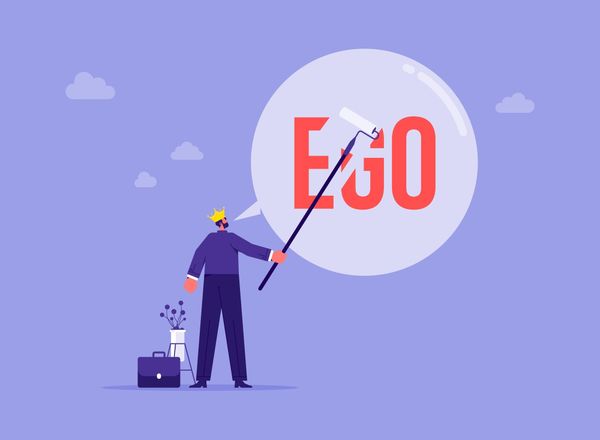
Because it's uncomfortable in a very specific way. Owning your choices means owning your outcomes, and when your outcomes aren't great, that's a genuinely hard thing to sit with. It's much easier to point at the economy, your boss, your upbringing, your circumstances, your ex, the general state of the world, or Mercury being in retrograde (a personal favorite), because blame feels safe. It protects your ego, and it lets you off the hook without having to change anything.
The catch is that it also keeps you completely powerless. When external forces are responsible for your situation, you have to wait for external forces to change before anything gets better. You become a passenger in your own life, and passengers don't get to pick the destination.
The Shift That Changes Everything
The moment you accept that your choices brought you here, is the moment you understand that your choices can take you somewhere else. And while that might feel like a burden, it's actually the complete opposite, it means you're not trapped. It means the wheel is in your hands, even when the road is genuinely rough.
You will make bad choices. You will choose wrong sometimes, and the consequences will be exactly as annoying as you'd expect. But when that happens, you can course-correct, you can learn something from it, and you can make a different call next time. That's how progress actually works, not through perfect decision-making, but through a willingness to be in the driver's seat when things go sideways.
How to Start Taking Ownership
If you've spent a long time handing your choices off to circumstance, this won't feel natural immediately. But it can start today, and it starts small.
→ Catch yourself when you say "I have no choice." Every time those words come out of your mouth or show up in your head, stop and challenge them. Ask yourself what options actually exist, including the ones you don't like, the ones that feel risky, and the ones that seem out of reach. Write them down. You'll almost always find more than you thought.
→ Trace the line between choices and where you are. Pick one area of your life that isn't working. Your career, your health, your relationships, wherever the friction is. Now work backwards. What choices, active and passive, led you here? This isn't about beating yourself up, it's about understanding the connection between decisions and outcomes so you start making decisions more deliberately.
→ Stop waiting for the perfect option. There's rarely one. Most decisions involve trade-offs, and waiting for the choice that has zero downsides is just a slower version of not deciding at all. Make the best call you can with what you actually know right now and adjust as you go.
→ Own the consequences without turning it into a whole thing. Every choice has consequences. Some of them will be ones you didn't see coming and don't love. When that happens, resist the urge to play victim, assign blame, or spend three weeks relitigating the decision. Own it, learn from it, and then move the fuck on. The faster you accept a consequence, the faster you can respond to it.
→ Practice on the low-stakes stuff first. You don't have to start by making the biggest decision of your life. Practice conscious choice-making on the small things, like: what you eat, how you spend your evening, or whether you pick up your phone or put it down. Build the muscle where the cost of a wrong answer is low, then apply it to the decisions that actually matter.
A Word About Genuine Constraints
I'm not naive about this. There are real constraints in life, health issues, financial limitations, family obligations, systemic barriers that make certain choices genuinely harder or less available. I'm not waving those away.
What I've observed, though, after years of working with people across a lot of different situations, is that the exceptions are far rarer than people think. Most "I have no choice" situations are actually "I don't like my choices" situations, and the distinction matters because one of those is a dead end and the other is a starting point.
The Choices You Make Today
You have choices, even if they aren't the ones you'd pick from an unlimited menu with no consequences attached. Some of them will be genuinely hard. Some of them will involve risk or sacrifice or discomfort that you'd rather not deal with. But they exist, and what you do with them, actively or passively, is building your life one decision at a time.
Choose intentionally, choose with your eyes open, and choose knowing that the choice you make today is shaping what you'll be dealing with six months from now.
Because the alternative is letting life happen to you. And that's a choice too, just not a good one.
You Have More Choices Than You Think: Why Taking Ownership of Your Decisions Is the First Step to Getting Unstuck
As a coach, one of my core philosophies is that of "choices."
Beyond the consideration of exceptions here and there, I firmly believe that everyone has choices.
Whether you realize it or not, you're a choice-making machine. You make hundreds of choices every single day.
From choosing to mash or not mash the snooze button in the morning, to choosing what to eat for lunch, to choosing whether to take a shower before going to bed.
You're constantly making choices.
And most of the choices you make throughout the day are made subconsciously. Or, at the very least, with very little thought.
But choices are being made.
And that's the key.
The 4 Flavors of Choices
Choices come in different forms, and understanding these forms is the first step toward taking back control of your life.
Flavor #1: The choices you know you made but won't take responsibility for.
These are the ones where you knew exactly what you were doing, but when the consequences showed up, you pointed the finger elsewhere. You took the shortcut at work, and when it backfired, you blamed your coworker for not catching your mistake. You skipped the gym for three months, and now it's the gym's fault for being too far away.
Flavor #2: The choices you made but didn't realize you made.
These are sneaky. They happen on autopilot. You "didn't have time" to work on your side business but somehow found two hours to scroll social media. You didn't consciously decide to waste that time. But you did decide. Your actions made the choice for you.
Flavor #3: The choices you know exist but refuse to acknowledge.
This is where denial lives. You know you could leave the job that's draining you. You know you could have that difficult conversation with your partner. You know you could set boundaries with that client who treats you like garbage. But acknowledging those choices means you'd have to do something about them. So, you pretend they don't exist.
Flavor #4: The choices you made because you chose not to make one at all.
This is passive choice-making. Inaction is still action. When you avoid making a decision, you're still making one. You're choosing to let circumstances, other people, or time make the decision for you. And guess what? Those forces rarely have your best interests in mind.
Why This Matters More Than You Think
Where you end up in life is a direct result of the choices you make or don't make.
That's not motivational poster fluff. It's just math.
Every choice has consequences. Those consequences compound over time. String enough of them together, and you get your current situation. Your job. Your relationships. Your health. Your finances. Your stress levels. Your happiness (or lack thereof).
People complain about this and that, but you rarely ever see them point the finger at the choices they made, actively or passively.
Which leaves those people stuck.
Because if you refuse to accept that your choices got you where you are, you can't make the choices necessary to get somewhere else.
You stay in the same loop. Same complaints. Same frustrations. Same results.
The Uncomfortable Truth About Feeling Stuck
Here's something most people don't want to hear:
Feeling stuck is almost always a choice problem, not a circumstance problem.
I'm not saying circumstances don't matter. They do. Some people have it harder than others. Some situations genuinely have fewer options. I'm not going to pretend that everyone starts from the same place or has access to the same resources.
But within your circumstances, whatever they are, there are still choices.
Maybe the choices aren't great. Maybe they're all some version of "hard." But they exist.
The person who says "I have no choice but to stay in this soul-crushing job" usually has choices. They might not like those choices. The alternatives might involve risk, discomfort, or sacrifice, but the choices are there.
→ Staying is a choice.
→ Leaving is a choice.
→ Looking for something else while staying is a choice.
→ Renegotiating your role is a choice.
→ Setting better boundaries is a choice.
→ Updating your resume is a choice.
Each of those leads somewhere different.
Why We Avoid Owning Our Choices
If taking responsibility for our choices is so powerful, why do most people avoid it?
Because it's uncomfortable.
Owning your choices means owning your outcomes. And when those outcomes suck, that's a hard pill to swallow.
It's easier to blame the economy, your boss, your upbringing, your spouse, the government, the weather, or Mercury being in retrograde.
Blame feels safe. It protects your ego. It lets you off the hook.
But it also keeps you powerless.
When you blame external forces for your situation, you hand over control to those external forces. You become a passenger in your own life, waiting for something out there to change before things can get better in here.
That's a miserable way to live.
The Power Shift That Changes Everything
The moment you accept that your choices brought you here is the moment you realize your choices can take you somewhere else.
That's not a burden. That's freedom.
It means you're not trapped. It means you're not a victim of circumstance. It means the steering wheel is in your hands, even when the road is rough.
Will every choice lead to a perfect outcome? No.
Will you make bad choices sometimes? Absolutely.
But at least you're in the driver's seat.
And when you screw up (which you will, because you're human), you can course-correct. You can learn. You can make a different choice next time.
That's how progress happens.
How To Start Taking Ownership of Your Choices
If you've spent years avoiding responsibility for your decisions, this shift won't happen overnight. But it can start today.
Step 1: Catch yourself when you say "I have no choice"
Every time those words come out of your mouth or pop into your head, stop. Challenge them. Ask yourself: "What choices do I actually have here?" List them out. Even the ones you don't like. Even the ones that seem impossible. Get them on paper.
You'll almost always find more options than you initially thought.
Step 2: Look at where you are and trace it back
Pick one area of your life where you're not happy. Your career. Your health. Your relationships. Your finances. Now, trace it all backwards. What choices led you here? Not to beat yourself up, but to understand the chain of decisions.
When you see the connection between choices and outcomes, you start making choices more intentionally.
Step 3: Stop waiting for the "right" choice to appear
There's rarely a perfect option. Most decisions involve trade-offs. Waiting for the choice that has no downsides is just another form of avoidance.
Make the best decision you can with the information you have. Adjust as you go.
Step 4: Accept the consequences without drama
Every choice has consequences. Some are good. Some are not. When the not-so-good ones show up, resist the urge to play victim. Own it. Learn from it. Move forward.
The faster you accept consequences, the faster you can respond to them.
Step 5: Practice on small stuff first
You don't have to start with life-altering decisions. Practice on the small ones. What you eat for lunch. How you spend your evening. Whether you respond to that email now or later.
Build the muscle of conscious choice-making on low-stakes situations. Then apply it to the bigger stuff.
A Quick Word About Exceptions
I'm not naive enough to think every situation has equal options.
There are genuine constraints in life. Health issues. Financial limitations. Family obligations. Systemic barriers. I'm not dismissing any of that.
But here's what I've observed in my years of coaching people:
The exceptions are far rarer than people think.
Most "I have no choice" situations are actually "I don't like my choices" situations. And there's a big difference.
Not liking your options doesn't mean you don't have any.
The Choices You Make Today Shape the Life You Live Tomorrow
I want you to remember something: You have choices.
They may not always be the greatest of choices. They may all involve some level of difficulty, risk, or sacrifice. But you do have options.
And the options you choose, actively or passively, are building your life one decision at a time. So, choose intentionally. Choose consciously. Choose with your eyes open.
Because the alternative is letting life happen to you. And that's a choice, too. Just not a very good one.