You're Burned Out Because You Turned Your Hobbies Into Unpaid Jobs
Somewhere along the way, you decided your painting hobby needed a business plan and a storefront on Etsy.
The Question That Makes People Look at Me Like I've Lost the Plot
"What'd you do for fun as a kid?"
When a new client comes to me feeling exhausted, overwhelmed, and quietly convinced there's something wrong with them, that's usually one of the first things I ask. They came to me to talk about their business, their team, their marriage, the fact that they can't get through a Tuesday without wanting to disappear, so they expect questions about their calendar or their five-year plan. Instead, I'm asking about riding bikes and comic books, and they look at me like I've randomly changed the subject on them. I mean, what does a twenty- or thirty-year-old memory have to do with the fact that they're running on fumes?
A lot, as it turns out.
More Responsibility, Less Time, and Somehow Also Less Joy
You've got more responsibility now than you used to, less time than you used to have, and a level of stress that would've sent your younger self into a full-body panic. None of that is news to you. What might be news is that the fix isn't a better morning routine, a new task manager, or finally color-coding your calendar the way everyone on your feed keeps telling you to. The fix is remembering what you did before every single thing you touched had to justify its own existence.
What You Actually Lost Between Then and Now
Think about how you spent your time as a kid.
→ Riding your bike until the streetlights came on.
→ Playing the same video game for six hours on a Saturday.
→ Reading the same comic book cover to cover for the fourth time.
→ Drawing pictures nobody was ever going to see.
You did all of it for one reason, because it felt good, and that was the whole justification. There was no return on investment attached to any of it, no performance review waiting at the end, and nobody keeping score except maybe you and a friend arguing about whose turn it was.
Somewhere between then and your first real job, that stopped, now everything you do has to earn its spot on the calendar, including the things that are supposed to be relaxing. Even those get run through the same filter as everything else: is this productive, is this useful, is this going to get me somewhere? You turned your own downtime into a line item, and you didn't even notice it happening.
The Story You've Been Running Without Reading the Fine Print
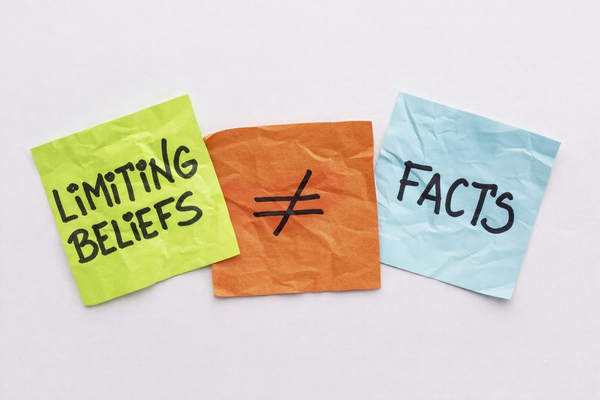
The story most people are operating on is that every minute has to count, downtime is for people who haven't figured out how to optimize their lives yet, and a hobby only earns its place if it builds a skill, grows a following, or shows up on a resume somewhere. You didn't invent that story, you inherited it, and you've been living inside it long enough that it feels like a fact instead of an opinion nobody ever asked you to sign off on.
And that story is exactly what's burning you out, and it's a shitty trade even before you add up what it's actually costing you. Your brain isn't built to run at full output indefinitely. It needs stretches of time where nothing is being measured, nothing can be failed, and there's no outcome riding on the result. That's not wasted time, that's maintenance, the same way sleep is maintenance and skipping it catches up with you whether you admit it or not.
A couple of years ago, I picked up a pencil again for the first time since I was a teenager. My plan wasn't grand or fancy, just doodling in a cheap sketchbook while half-watching TV. I wasn't trying to become a world-renowned artist or turn it into a business venture, I just needed to take a short break from reality and do something I used to enjoy doing as a kid. And it became a routine for me, something I did every day; sometimes for 30 minutes, sometimes for a couple of hours.
Did my doodling end up solving all the world's problems? Of course not, but after a few months of doing it consistently, my thinking did get a little sharper, my writing did get a bit easier, and my baseline stress did come down a notch. Why? Because I gave my brain permission to wander without a destination, which did more for me than any productivity system or hack I've ever tried.
Your Body Already Knew This
Play lowers cortisol and triggers some of the same feel-good chemistry as exercise. In fact, researchers at the University of Southampton have correlated reconnecting with positive childhood memories to higher life satisfaction and lower stress, months after the fact. None of that should surprise you though, because your body's been trying to tell you this for years, you've just been too busy optimizing everything to listen.
Hobby or Unpaid Second Job? Know the Difference
Most people mess this up pretty badly. You pick the guitar back up, and within two weeks you're thinking about gigging. You start running again, and suddenly you've signed up for a half marathon. You pick up a paintbrush, and you're already mentally pricing out the pieces you could sell. That's not play anymore, that's just another job you gave yourself, unpaid, and with worse hours. Why the fuck would you do that to yourself?
A hobby exists because it feels good to do it, an optimization project exists because it gets you somewhere better, gets you more money, or makes you look more impressive at a dinner party. You're allowed to improve at something you love, and you're allowed to eventually sell your work if that's genuinely where it goes on its own, but if the entire reason you picked something back up gets quietly replaced by a goal within the first month, you've smuggled your job back in through the side door.
Getting It Back: A Practical Way In
If any of this has landed with you, here's how to actually act on it instead of nodding along and closing the tab.
→ Name what you loved before it had to earn anything. Go back to childhood and adolescence and write down five things you did purely because they felt good, not because they'd look good or because someone told you to. Drawing, building things, pickup basketball, reading fantasy novels, taking things apart just to see how they worked. Get it on paper without editing yourself.
→ Pick one and lower the bar until it's embarrassingly easy. Don't try to resurrect all five at once. Pick the one that still gives you a small flicker of something when you think about it, and make the barrier to entry almost insultingly low. A five-dollar sketchbook. A pickup game at the park down the street. A library card and whatever fantasy novel is closest to the door.
→ Guard it like you'd guard a paying client's time slot. This is where it falls apart for most people. They pick the hobby back up and within a month it's got a following, a goal, a metric attached to it. Set a hard boundary up front: this exists for enjoyment only, no comparison, no monetization plan, no posting about it for validation. That boundary is the entire point, and it's yours to protect.
→ Put it on the calendar like you mean it. If you wait for free time to show up on its own, you'll be waiting until you retire. Block off thirty minutes this week and treat it as non-negotiable, the same way you'd treat a client call. It'll feel a little ridiculous to schedule fun. Do it anyway. Once the habit takes, you can loosen the structure around it.
→ Pay attention to how you feel afterward, and don't force it. Not a full journaling exercise, just a quick gut check. Lighter? Less wound up? A little more creative? Good, that's the signal working. If you feel nothing in particular, that activity might not be the one anymore, and that's fine too. Try something else off your list instead of forcing yourself to enjoy something out of obligation.
What This Actually Costs You If You Skip It
Burnout isn't only about working too many hours, it's what happens when you live in a way that's fundamentally out of step with how you're built. You need unstructured time. You need things that exist for no reason beyond enjoyment. Cut those out completely, and you're not becoming more productive, you're just running the tank dry faster while calling it discipline.
Your relationships take the hit first, because you can't really be present with someone while half your brain is still thinking about the next task. Creativity goes next, because your mind never gets the wandering time it needs to make an unexpected connection. And underneath all of it, you lose touch with whatever used to make you feel like an actual person instead of a schedule with a pulse.
The Permission You Didn't Know You Were Waiting For
You don't need to earn the right to enjoy something. You don't need to hit some invisible productivity milestone before you're allowed to have fun, and you definitely don't need to justify time spent on something that serves no purpose beyond making you feel human again.
That childhood activity you keep thinking about isn't just a nice memory. It's information. The version of you that rode bikes for hours and drew pictures nobody asked for is still in there somewhere, underneath the calendar, the KPIs, and the color-coded morning routine. Pick one activity this week with zero goals attached, and see what happens.
Your nervous system has been trying to tell you something for a while now. Maybe it's time to actually listen to it instead of scheduling around it.